Search Engine Optimization
photo of two business people working on their website's quality backlinks.

Table of Contents

When it comes to websites, most business owners and organizations wonder how to show up better in Google. It's a common question, and the answers often involve technical aspects like site load times, on-page optimization, domain authority, and mobile responsiveness. These are all essential factors, but there's another piece of the puzzle that often goes under appreciated: quality backlinks.

At B&B Media, we've seen firsthand how backlinks can make or break a website's performance in search engine rankings, but what exactly are backlinks?

However, not all backlinks are created equal. Some can significantly boost your site's visibility, while others can drag it down. In this post, I'll walk you through the good, the bad, and the ugly sides of backlinks, where you can get them, and how to manage them effectively to keep your site on top.

1. What Are Backlinks?

Backlinks, also known as inbound links, are links from one website to another. Think of them as endorsements; when a website links to yours, it signals to search engines that your content is valuable and trustworthy. The more high-quality backlinks you have, the better your chances of ranking well in search engine results.

However, not all backlinks are beneficial. Understanding the different types of backlinks and their impact on your SEO is essential for building a strong online presence.

2. The Good: High-Quality Backlinks

Natural Backlinks

Natural backlinks are the gold standard in SEO. These links occur organically when other websites find your content so valuable that they choose to link to it without any prompting.

Search engines love natural backlinks because they indicate genuine value and relevance. To earn natural backlinks, focus on creating exceptional content that addresses the needs and interests of your target audience.

Editorial Backlinks

Editorial backlinks are placed within content by an editor or writer because they enhance the article. These links are highly credible because they're typically from authoritative sites that trust your content enough to share it with their audience.

You can earn editorial backlinks by producing high-quality, authoritative content that others want to reference in their own work.

Backlinks from Authoritative Sites

Backlinks from high-authority websites are incredibly powerful. These sites, often recognized leaders in their industry, pass on strong "link juice" that significantly boosts your site's credibility and ranking potential.

A link from the New York Times, for example, would provide more link juice than say your local newspaper's website. That's where domain authority comes in, but we'll talk about that later.

To secure these backlinks, you can engage in networking, guest posting, or being featured in industry-specific publications.

3. The Bad: Low-Quality Backlinks

Purchased Links

It might be tempting to buy backlinks to quickly boost your site's ranking, but this is a risky strategy. Purchased links are against Google's guidelines and can lead to severe penalties, including a significant drop in search rankings.

Instead of buying links, focus on earning them through legitimate methods.

Links from Irrelevant Sites

Backlinks from websites that are unrelated to your industry or content offer little to no SEO benefit. In fact, search engines may view these links as spammy, which could hurt your ranking.

To avoid this, build relationships within your niche and seek backlinks from relevant and related sites.

Excessive Reciprocal Links

Reciprocal linking, where two websites agree to link to each other, isn't inherently bad. However, when overused, it can be seen as manipulative by search engines. Keep reciprocal links to a minimum and ensure they're relevant to your content to avoid any negative impact on your SEO.

4. The Ugly: Toxic Backlinks

Spammy Links

Spammy links from low-quality sites, often referred to as link farms, are the bane of good SEO. These links can trigger penalties from search engines, leading to a sharp decline in your rankings.

It's crucial to monitor your backlink profile and use tools like SEMRush (get your free trial today!) and Google Search Console to disavow any toxic backlinks that could harm your site.

Over-Optimized Anchor Text

Using keyword-stuffed anchor text (the clickable text in a hyperlink) is a tactic that's easily recognized and penalized by search engines. This practice, known as over-optimization, can lead to penalties.

To avoid this, use natural and varied anchor text that accurately reflects the content of the linked page.

PBN (Private Blog Network) Links

Private Blog Networks (PBNs) are groups of websites created solely to link to each other and manipulate search engine rankings. While PBNs might provide short-term gains, they come with a high risk of severe penalties if detected by search engines.

It's best to steer clear of PBNs and focus on legitimate, ethical link-building strategies.

5. How to Evaluate Backlink Quality and Manage Them

Using Semrush to Evaluate Backlink Quality

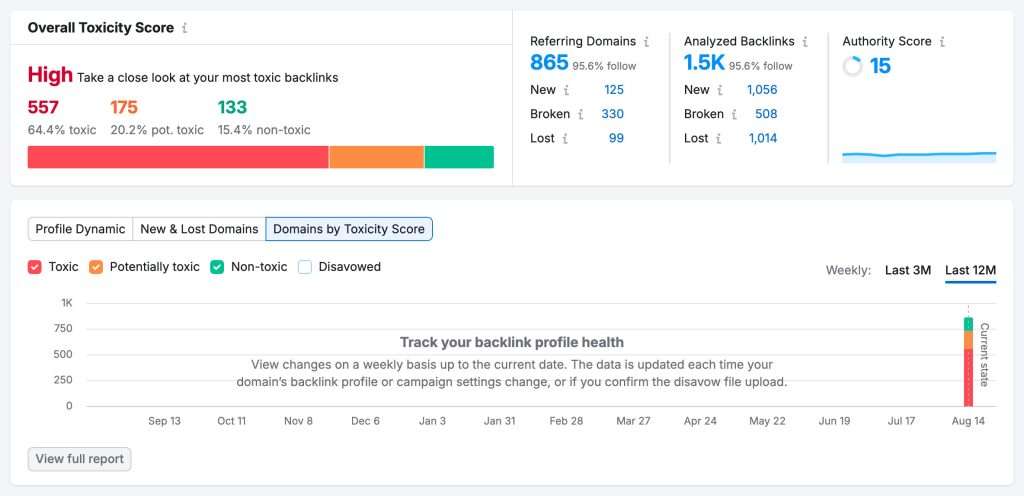
At B&B Media, we use Semrush to thoroughly evaluate the quality of our clients' backlinks. Semrush is a powerful tool that helps us analyze our backlink profiles and identify which links are helping or hurting our site's SEO.

With SEMRush (get your free trial today!), we can easily assess each backlink's Domain Authority, Page Authority, and spam score, ensuring that we only keep links that contribute positively to our SEO efforts.

Photo of the Semrush backlink audit overview, showing a high number of toxic backlinks.

Whitelisting Good Backlinks

Good backlinks, especially those from high-authority and relevant sites, should be whitelisted or maintained as part of your backlink strategy. At B&B Media, we make sure to keep these valuable links as they enhance our domain authority and improve our search engine rankings.

Managing Okay Links with Nofollow Attributes

Sometimes, backlinks come from sites that aren't harmful but also don't provide significant SEO value. In these cases, adding a nofollow attribute can be a smart move.

At B&B Media, we carefully evaluate these "okay" links and decide whether to remove them or add a nofollow attribute. This approach protects our site from potential penalties while maintaining a clean and effective backlink profile.

Disavowing Bad Backlinks

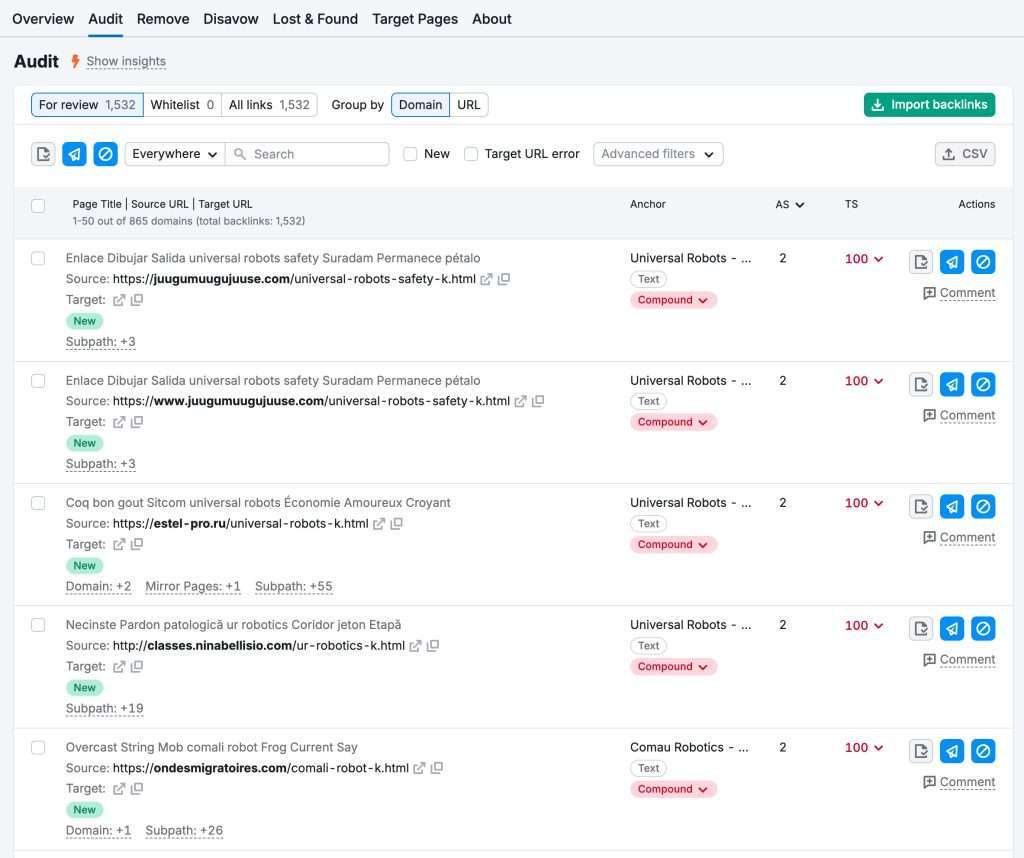
If Semrush identifies toxic or spammy backlinks, it's crucial to disavow them. Disavowing tells search engines to ignore these links, preventing them from harming your site's ranking.

At B&B Media, we regularly monitor our backlink profile and disavow any harmful links to ensure our SEO efforts remain effective and our site's reputation stays intact.

Photo of the Semrush backlink audit dashboard, showing highly toxic backlinks that need to be disavowed.

Why Managing Backlinks Is Important

Managing your backlinks is crucial because search engines use them as a significant ranking factor. High-quality backlinks can improve your site's visibility, while bad or toxic links can lead to penalties that hurt your rankings.

At B&B Media, we prioritize regular evaluation and management of our backlinks through automated, weekly scans to keep our clients' sites healthy and competitive in search engine results.

By staying on top of our backlink profile, we ensure that our SEO strategies deliver the best possible outcomes.

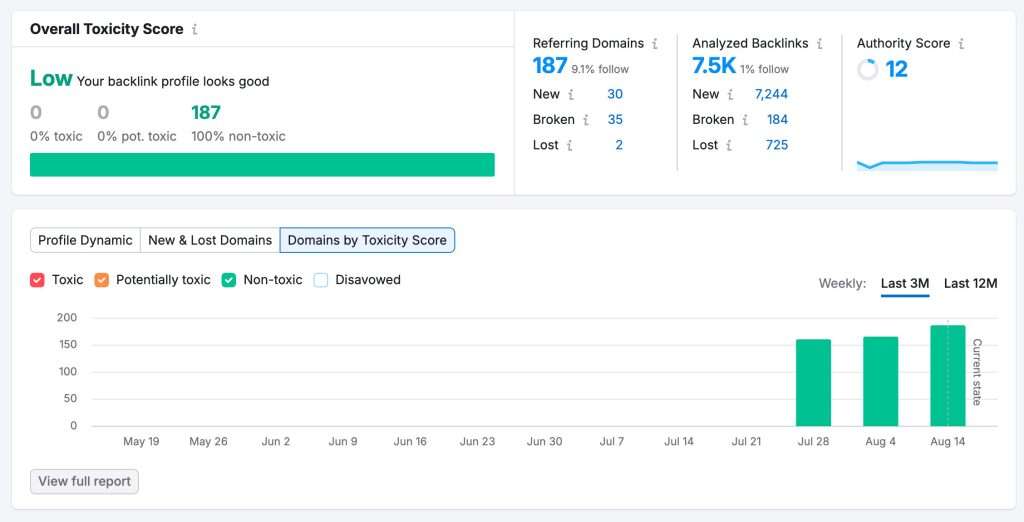
Photo of the Semrush backlink audit dashboard, post cleanup.

6. How to Build Good Backlinks

Content Marketing

One of the most effective ways to earn good backlinks is through content marketing. By creating valuable, shareable content, you naturally attract links from other websites that find your content useful. This can include blog posts, infographics, videos, and other types of content that resonate with your audience.

Guest Blogging

Guest blogging is another excellent strategy for building high-quality backlinks. By writing guest posts for reputable websites in your industry, you can earn valuable links back to your site.

Ensure that your guest posts are high-quality and provide value to the host site's audience.

Broken Link Building

Broken link building involves finding broken links on other websites and offering your content as a replacement. This not only helps the website owner fix a broken link but also provides you with a valuable backlink.

Use tools like Ahrefs or Semrush to identify broken links and reach out to site owners with your content.

Outreach

Building relationships with influencers, bloggers, and other industry leaders can lead to natural backlinks over time. Outreach involves connecting with these individuals, sharing your content, and offering to collaborate on projects that result in mutual benefits, including backlinks.

Wrapping Up

Quality backlinks are a crucial part of any SEO strategy, but it's essential to understand the differences between good, bad, and ugly backlinks.

By focusing on earning high-quality, relevant backlinks and avoiding spammy or manipulative practices, you can build a strong, sustainable SEO foundation that helps your website climb the search engine rankings.

Regularly evaluating and managing your backlinks with tools like Semrush ensures that your site stays healthy and competitive.

At B&B Media, we're committed to providing our clients with the best SEO practices, ensuring that their websites thrive in the ever-changing digital landscape. Remember, when it comes to backlinks, quality always trumps quantity.

Want to Learn More about SEO?

Want to improve your website's visibility on Google? Our SEO FAQ answers the most common questions about search engine optimization, rankings, keywords, and website performance. Whether you're looking to boost traffic, optimize content, or understand search engine result pages (SERPs), we've got you covered. Explore our SEO FAQ here.

Related Posts